



Acoustic Noise Control — Avoiding the "Quieter is Better" Fallacy
Introduction: Why Silence Is Not Always Better
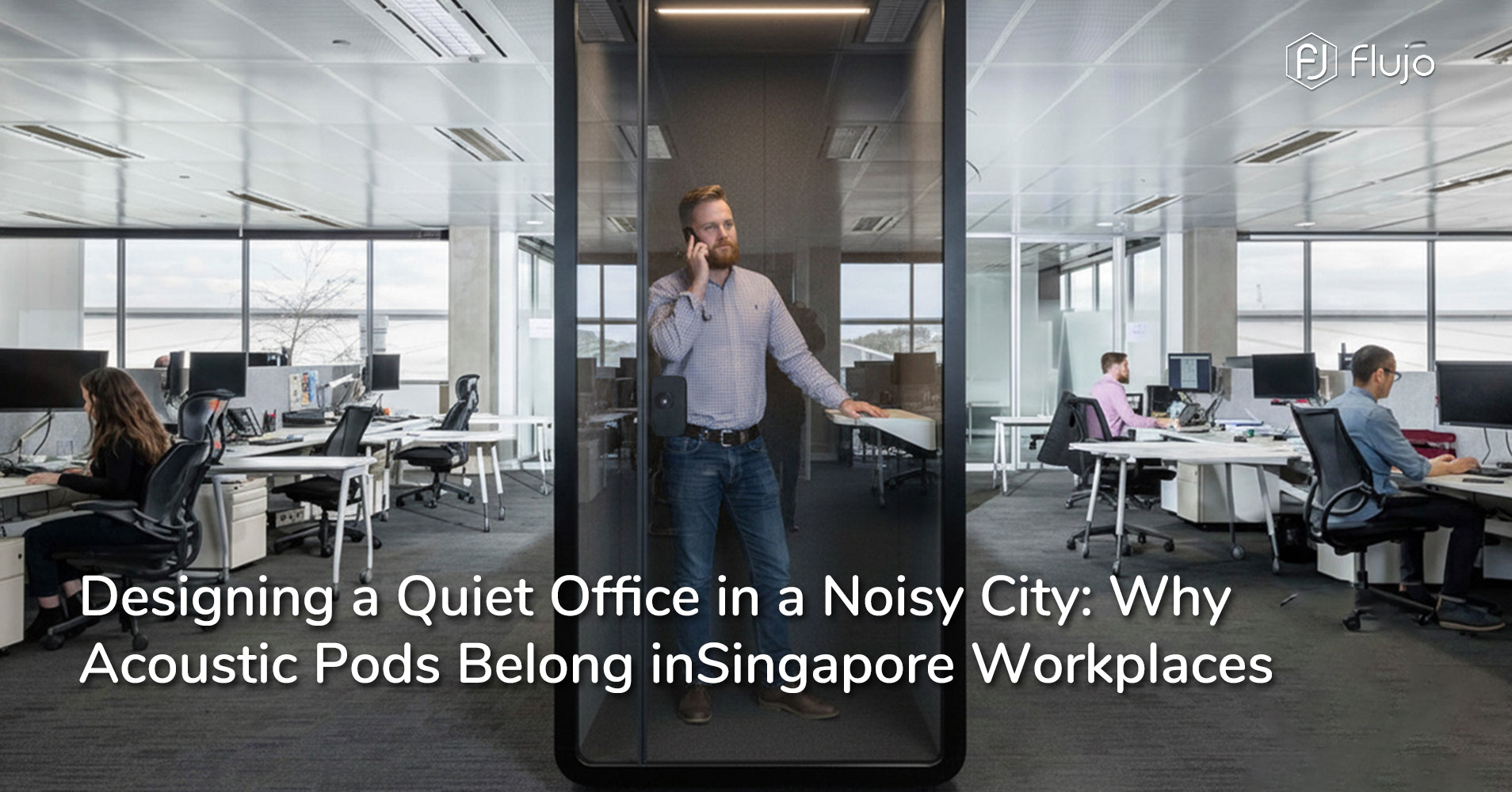
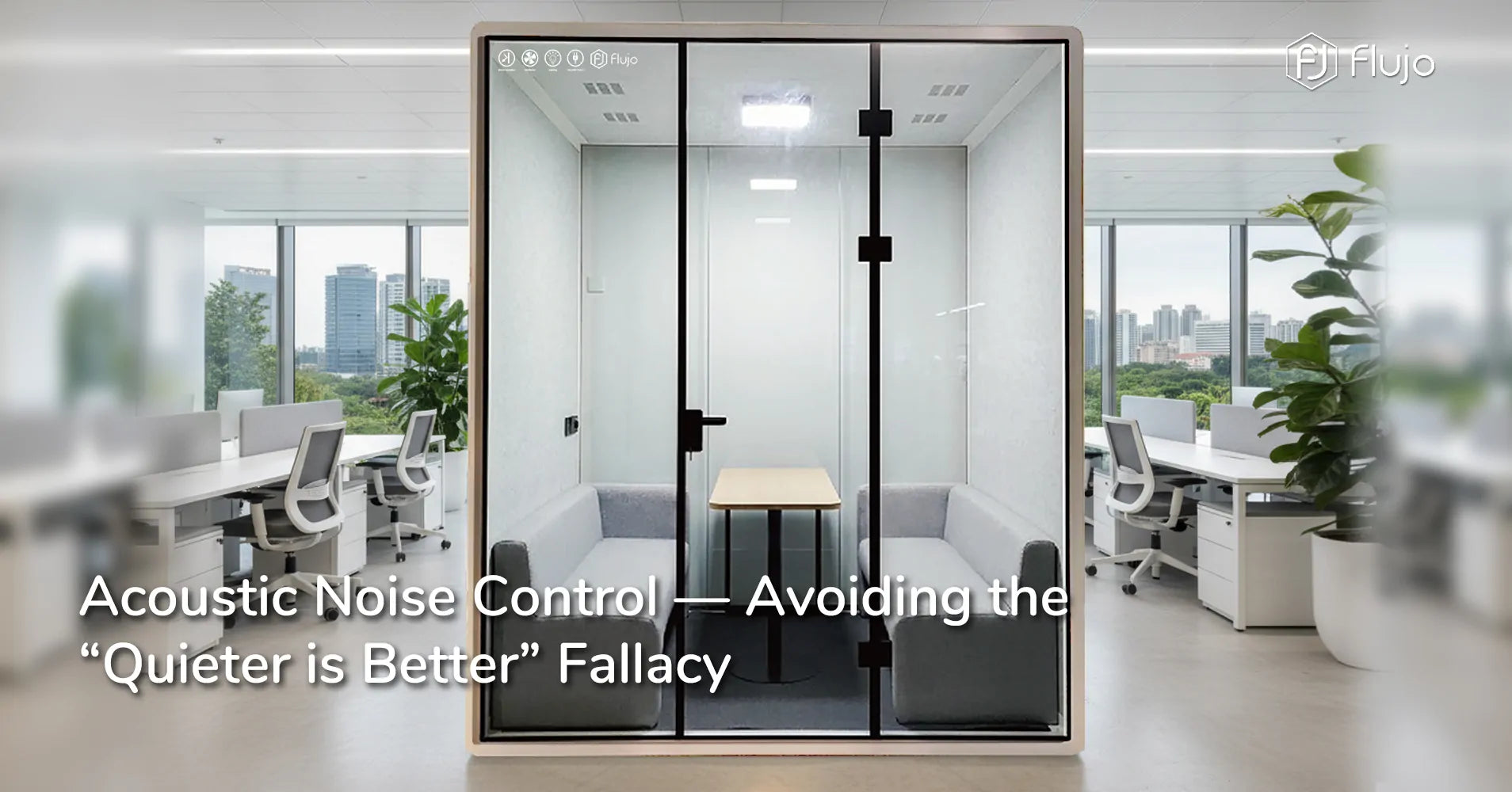
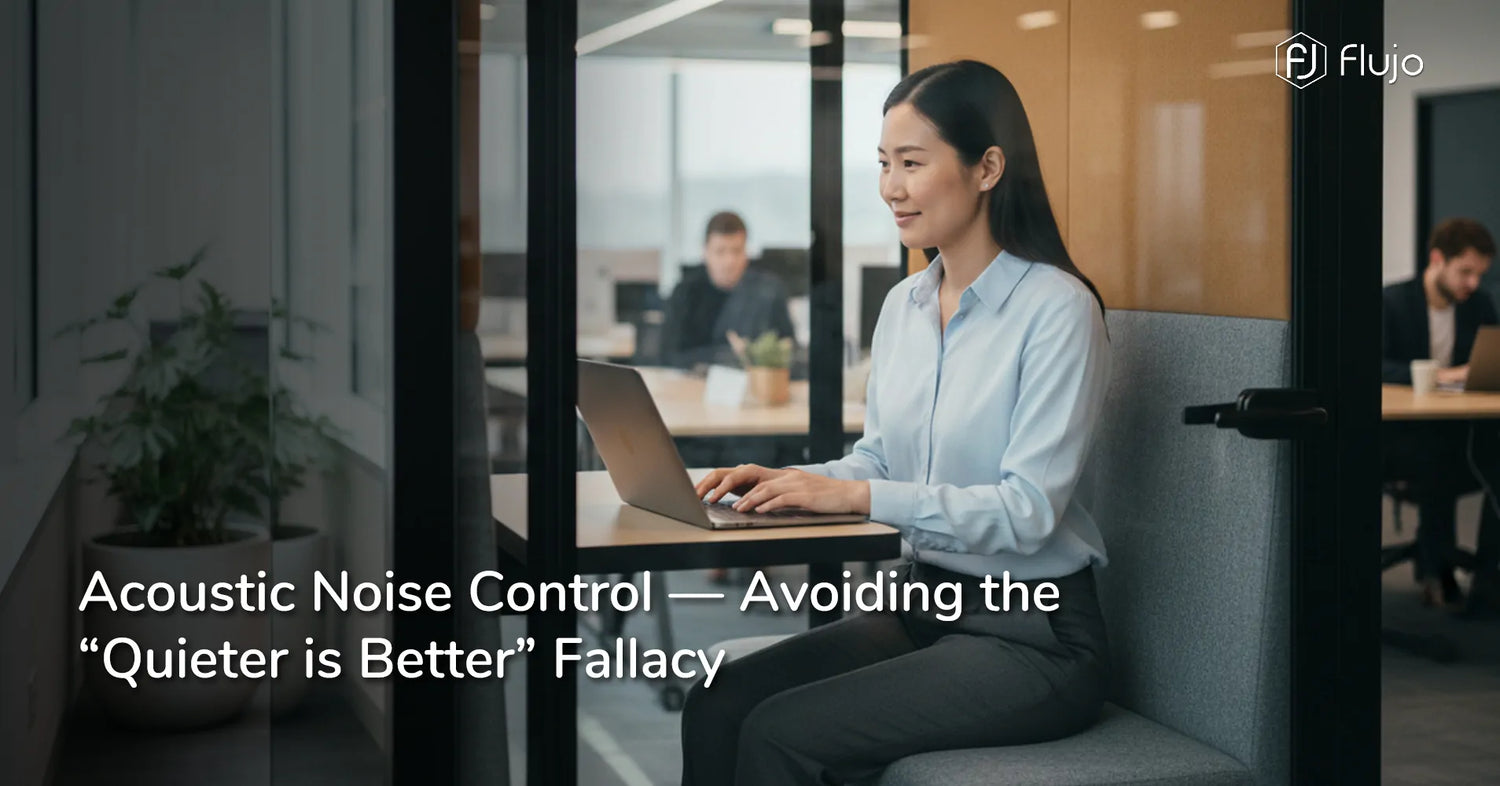
As open-plan and hybrid workplaces become increasingly common, office pods and acoustic booths are now widely used for phone calls, video meetings, focused work, and even short breaks.
A common assumption has emerged: the more soundproof a pod is, the better the experience.
However, international acoustic standards, human auditory science, and real-world usage data suggest otherwise.
Overly silent environments can be uncomfortable, fatiguing, and even counterproductive.
This article explains why balanced acoustic isolation—rather than extreme silence—is the true goal of well-designed acoustic pods.
What Do We Really Mean by "Soundproofing"?
Traditional Metrics: STC and Rw
In architectural acoustics, sound insulation is typically measured using STC or Rw ratings. These metrics describe how effectively a structure blocks airborne sound transmission.
For example:
- An STC rating of 30 indicates approximately a 30 dB reduction in transmitted sound pressure
- This equates to roughly 99.9% sound energy reduction
These metrics are appropriate for walls and building structures—but pods are not buildings.
Speech Privacy: The Key Metric for Pods (ISO 23351-1)
For acoustic pods, the more relevant question is: Can people outside understand what is being said inside?
This is why ISO 23351-1 introduces Speech Level Reduction (DS,A) as the primary performance indicator.
| Class | DS,A (dB) | Meaning |
|---|---|---|
| A | 30–33 | High speech privacy |
| B | 25–30 | Good privacy |
| C | 20–25 | Depends on ambient noise |
| D | 15–20 | Limited privacy |
| Unrated | <15 | No speech privacy |
Industry consensus places ~30 dB speech reduction as the optimal balance between privacy and comfort.

Why Extreme Silence Can Be Uncomfortable
Human Hearing Needs Reference Sound
Humans are accustomed to environments with background noise typically between 30–45 dB(A).
This ambient sound acts as a perceptual reference for the auditory system.
In extremely quiet spaces—such as anechoic chambers—people often experience:
- Awareness of internal body sounds
- Ear pressure or discomfort
- Anxiety or reduced focus
The absence of reference sound forces the brain to amplify internal signals, leading to discomfort rather than calm.
The Positive Role of Background Noise
Moderate background sound:
- Masks sudden disturbances
- Reduces auditory stress
- Enhances perceived speech privacy
- Creates a more natural acoustic environment
This is why well-designed pods intentionally avoid complete silence.

The True Goal of Pod Design: Privacy with Comfort
Speech Privacy Is Not Absolute Isolation
The purpose of an acoustic pod is not to eliminate all sound, but to ensure speech intelligibility is lost outside the pod.
At approximately 30 dB reduction:
- Speech becomes indistinct
- Privacy is preserved
- Comfort is maintained
This approach is widely adopted by leading international pod manufacturers.
Balancing Isolation, Ventilation, and Comfort
Effective pod design integrates:
- Low-noise ventilation
- Absorptive materials to control reverberation
- Balanced sound reflection and diffusion
Standards such as ISO 3382 support environments with controlled background noise and moderate reverberation—conditions proven to support long-term comfort and productivity.
Conclusion
Acoustic design is not a competition for absolute silence.
A truly well-designed acoustic pod finds the right balance between speech privacy, psychological comfort, and real-world usability.
As international standards and research consistently show, moderate speech level reduction (around 25–30 dB)—combined with proper ventilation, sound absorption, and a comfortable background sound environment—often delivers a better user experience than extreme isolation. It effectively prevents speech intelligibility outside the pod, without creating the discomfort, pressure, or sensory fatigue associated with overly silent spaces.
This philosophy is at the core of how we design our own acoustic pod products. Rather than pursuing theoretical maximum soundproofing values, we focus on how people actually work, think, and feel inside these spaces over time.
Our pod product range is built around several key principles:
- 🎧 Speech-privacy–driven acoustic performance, aligned with international office acoustic evaluation methods
- 🌀 Balanced enclosure and airflow design, avoiding the discomfort of overly sealed environments
- 🧠 Human-centered comfort, supporting long, focused work sessions
- 🏢 Modular solutions for open offices, hybrid workplaces, and flexible layouts
Whether used for video calls, focused tasks, or private conversations, we believe acoustic pods should be more than sound barriers—they should be carefully designed environments that support productivity and well-being.
👉 Explore our Acoustic Pod Product Series to see how different models balance acoustic performance, spatial design, and real workplace needs.